
Glenfield College: What North Shore Families Need to Know
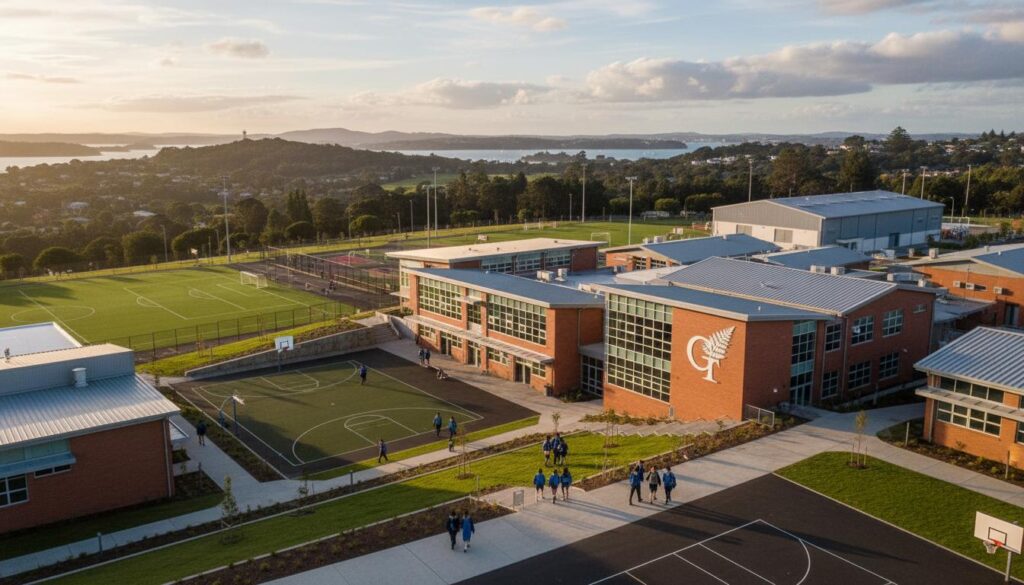
Choosing a secondary school is a big call. If you live on Auckland’s North Shore, glenfield college will likely be on your shortlist. This guide explains what the college is, how a typical day and the curriculum work, the kinds of programmes you can expect, the pros and cons, and how to decide if it fits your whānau. You’ll also find quick answers to common questions.
What is
Glenfield College is a state, co-educational secondary school in Glenfield on Auckland’s North Shore. It serves students in Years 9–13 and offers the national NCEA qualification pathway.
As a local, government-funded kura, the college focuses on a broad education: academic subjects, arts and culture, sport, technology, and student wellbeing. It draws students from the Kaipātiki area and beyond through standard enrolment processes.
How it works
Daily life at glenfield college follows a rhythm familiar across New Zealand secondary schools: a timetable of periods, a mix of core and elective subjects, and a steady build towards NCEA assessments and future pathways.
Curriculum and NCEA in plain terms
NCEA (National Certificate of Educational Achievement) is a standards-based qualification. Students earn credits by meeting standards in each subject. Some standards are assessed during the year (internal), and others through end-of-year exams (external). Over Years 11–13, learners build credits at Levels 1–3. University Entrance (UE) is achieved through specific combinations of Level 3 credits in approved subjects, alongside literacy and numeracy requirements set by NZQA.
For families, the key point is simple: each subject offers a pathway of standards, and students collect credits as they show what they can do. Schools regularly report progress so whānau can track how close a student is to their goals.
Pastoral care and support
Like most New Zealand state secondary schools, glenfield college supports students through form classes or mentor systems, deans for each year level, and learning support for those who need it. Wellbeing, guidance counselling, and career advice sit alongside classroom learning, so rangatahi have a clear picture of their options after school.
Timetable and learning blocks
The week is divided into periods for subjects such as English, maths, sciences, social sciences, technology, arts, PE and health. Senior students choose subject combinations that align with apprenticeships, university study, or going straight into work. Co-curricular activities typically run before school, at lunchtime, or after school.
Enrolment, zoning, and costs
Glenfield College uses standard state-school processes. An enrolment scheme (zone) may apply to manage places. In-zone students have priority; out-of-zone applicants may be offered places via ballot if space allows. State schools can request a voluntary donation and may have subject costs, sports fees, or uniform expenses. Financial assistance options are often available—ask the office early if that would help.
Transport and access
Situated near major North Shore routes, the college is reachable by public buses, drop-offs, cycling, or walking from nearby suburbs. Many families weigh transport time alongside subject offerings and pastoral care when choosing glenfield college.
Types / examples
Programmes at a co-ed state secondary like glenfield college cover a wide spread. Exact offerings change year to year, so always check the latest prospectus. Here’s what you can usually expect to see.
Core and elective subjects
- English, mathematics, sciences (general science in junior years, then biology, chemistry, physics)
- Social sciences (history, geography, economics, business studies)
- Arts (music, drama, visual arts, design)
- Technology (food, digital technologies, design and visual communication, materials tech)
- Health and physical education
- Languages (availability varies by year and demand)
Pathways and extension
- Academic pathways aimed at UE and tertiary study
- Vocational and trades-aligned options (practical technologies, work experience, industry tasters)
- Leadership and service opportunities through student councils or house systems
- Learning support and extension programmes, depending on student needs
Co-curricular life
- Team sports and individual codes, from mainstream to niche where coaching is available
- Performing arts: bands, ensembles, theatre, cultural groups
- Clubs and competitions: debating, tech, STEM challenges, community projects
Pros and cons
Every school suits some learners more than others. Here’s a balanced view to help you assess glenfield college for your situation.
Pros
- State, co-educational setting that reflects real-world diversity and teamwork
- NCEA pathway with internal and external assessments to showcase strengths across the year
- Broad curriculum with room to shift subjects as interests evolve
- Community feel and local connections on the North Shore
- Access to sport and arts without the higher tuition fees of private schools
Cons
- Enrolment zones can limit out-of-zone placements
- Subject lines sometimes clash; seniors may need to prioritise
- Popular activities may have trials or limited spaces
- Uniform, activity fees, and device costs still add up even in a state school
How to use or choose
Use this step-by-step process to decide whether glenfield college fits your child’s goals and your family’s logistics.
- List needs and goals: strengths, interests, support requirements, and post-school ideas.
- Check the zone: confirm your address status and key dates for enrolment or ballots.
- Read the prospectus: focus on subjects in Years 10–13 and how they lead to NCEA Levels 1–3.
- Visit: attend open evenings or book a tour. Notice classroom tone, student leadership, and facilities relevant to your child.
- Review assessment approach: ask how the school balances internal assessments with exam preparation and how progress is tracked.
- Explore co-curriculars: look for depth, coaching, rehearsal times, and costs.
- Discuss support: talk to deans or SENCO about learning, wellbeing, and careers guidance.
- Confirm logistics: transport times, device requirements, uniform, and approximate annual costs.
- Apply on time: complete forms, provide documents, and mark orientation dates.
- Set up for success: organise stationery, devices, and a simple homework routine before Term 1.
Comparison: Glenfield College and other school types
Families often weigh a local state secondary against integrated or private options. This table outlines typical differences to help you frame questions as you consider glenfield college.
| Feature | Glenfield College (State, Co-ed) | Integrated School | Private School |
|---|---|---|---|
| Funding and fees | Government funded; voluntary donation; activity/subject costs may apply | Government funded; compulsory attendance dues; donations and activity costs | Independent funding; tuition fees plus activity costs |
| Curriculum | NCEA pathway (Levels 1–3, UE) | Usually NCEA; some offer additional pathways | NCEA and/or Cambridge/IB depending on school |
| Entry | In-zone priority; out-of-zone ballot if places available | Priority to families aligned with the school’s special character | Application and selection processes vary |
| Co-educational | Co-ed | Varies (co-ed or single-sex) | Varies (co-ed or single-sex) |
| Culture and ethos | Local community focus; inclusive | Special character (e.g., faith-based) | Independent ethos; broader resource base |
| Costs to consider | Uniform, device, trips, sports/cultural fees | Uniform, device, trips, sports/cultural fees, attendance dues | Uniform, device, trips, sports/cultural fees, tuition fees |
FAQ
Is glenfield college a good school?
“Good” depends on your child’s needs. Look at the subjects they want, the support on offer, and how the school communicates progress. Visiting classes and talking to current families is the fastest way to get a feel for fit.
What qualification does the school offer?
The college follows New Zealand’s NCEA pathway. Students gain credits through internal assessments during the year and external exams at the end of the year in many subjects.
Do I have to live in zone to attend?
In-zone students have priority. Out-of-zone places, if available, are usually offered via a ballot system with published deadlines. Check current enrolment information early.
What does it cost to attend a state school like glenfield college?
There may be a voluntary school donation, uniform and device costs, and fees for sports, arts, or subject materials. The school can provide an up-to-date breakdown and payment options.
How big are classes?
Class sizes vary by year level and subject. Senior specialist subjects can be smaller; popular junior classes may be larger. Ask for typical ranges during your visit.
How can I track my child’s NCEA progress?
Most schools share live or regular reports showing standards attempted and credits achieved. Families can also use NZQA learner accounts for verified results. Ask how the college updates whānau across the year.
Are there options for practical, hands-on learners?
Yes. Technology subjects, project-based learning, and vocational pathways provide practical options alongside academic courses. Discuss specific interests during subject selection.
What support exists for learning or wellbeing needs?
Students can access deans, guidance counselling, learning support, and careers advice. If your child has particular needs, arrange a meeting before enrolment to plan the right supports.
How does glenfield college prepare students for life after school?
Through subject planning, careers education, mock interviews or work exposure opportunities, and mentoring for pathways into apprenticeships, tertiary study, or employment.
Final thoughts
For many North Shore families, glenfield college offers what matters most: a balanced education, grounded in community, with NCEA credentials recognised nationwide. Visit, ask direct questions, and match the school’s strengths to your child’s goals. If the timetable, culture, and support click, you’ll know you’ve found the right fit.