
Dishwasher guide for New Zealand homes: how it works, what to buy, and how to save
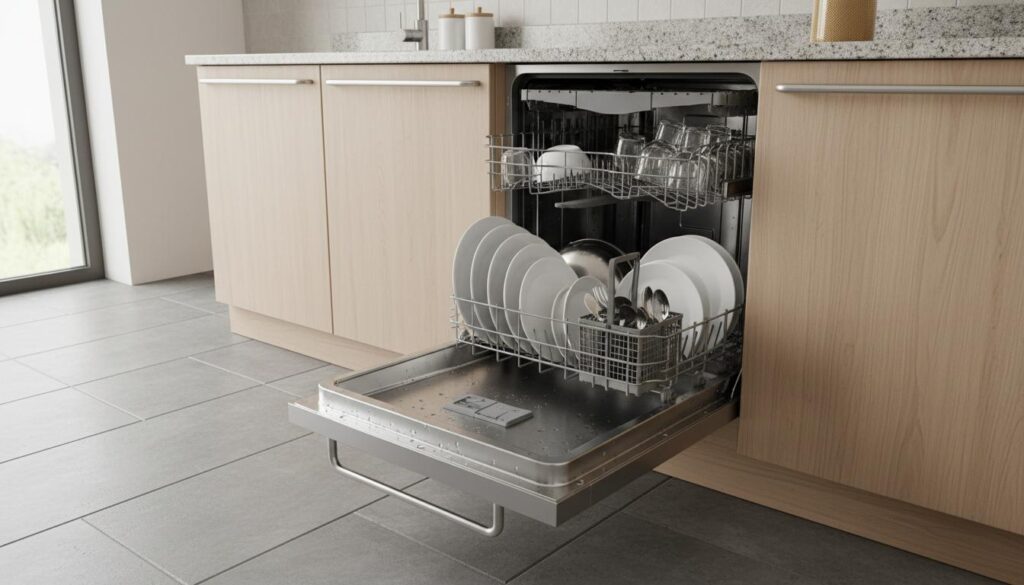
A good dishwasher frees up your evenings, cuts water use, and keeps glassware sparkling. The tricky part is choosing the right model and using it well. This guide explains the essentials for New Zealand households—how a dishwasher works, the types available here, the real pros and cons, how to choose or use one properly, and answers to common questions Kiwis ask before they buy.
What is
A dishwasher is a kitchen appliance that automatically washes and dries dishes, cutlery, and cookware. It sprays hot water and detergent through rotating arms, filters out food, then rinses and dries. Modern units in New Zealand are usually 60 cm wide, slide under a benchtop, and plug into a standard 10 A, 230–240 V outlet. Slimline 45 cm models, benchtop units, and Fisher & Paykel DishDrawer designs are also popular where space is tight.
Key features you’ll often see on NZ models include:
- Multiple wash programs (Eco, Auto/Sensor, Heavy, Quick, Delicate)
- Adjustable racks or a third cutlery rack
- Delay start and half-load options
- Anti-flood hoses (AquaStop) and child locks
- Energy and water efficiency labels compliant with Australian/New Zealand standards
How it works
Under the skin, a dishwasher is a precise water and heat management system. Here’s the simple version of what happens each cycle.
- Fill: The inlet valve lets in a measured amount of water (modern full-size units often use 9–14 L on Eco).
- Heat: An internal heater warms the water. Most machines connect to cold water in NZ, though some allow hot water up to around 60°C.
- Wash: A pump drives water through spray arms. Detergent from the dispenser mixes in. Sensors in “Auto” modes adjust time and temperature based on soil level.
- Filter: Food particles are trapped by filters. Some machines have a self-cleaning filter system; many need a quick manual rinse.
- Rinse: Fresh water flushes away detergent. Rinse aid improves drying and reduces spotting.
- Dry: Common methods include condensation drying (using the hot walls of the tub), fan-assisted drying, or mineral-assisted drying on some European models.
- Drain: Wastewater exits via the drain hose to the sink trap.
Expect an Eco cycle to take longer (often 2–4 hours) because it uses lower temperatures and less water. Quick cycles are faster but typically use more water and energy per plate washed.
Types / examples
Freestanding (60 cm)
Standard size with finished sides and top. Easy to swap into rentals or existing kitchens. Brands common in NZ include Bosch, Fisher & Paykel, Beko, Haier, LG, Samsung, Westinghouse, Asko, Miele, and Smeg.
Built-in / integrated
Slides under the bench and can be semi-integrated (visible control panel) or fully integrated with a cabinetry door. Great for a seamless look in renovations and new builds.
Slimline (45 cm)
Narrow format for small kitchens or apartments. Capacity drops, but efficiency can still be strong.
Benchtop / compact
Sits on the counter. Good for one–two person households or holiday homes. Some connect to a tap adapter; others plumb in permanently.
DishDrawer (single or double)
Invented by Fisher & Paykel in New Zealand. Operates as one or two drawers you can run independently. Ergonomic loading and ideal for frequent small loads.
Portable (on castors)
Less common now, but useful where under-bench space is unavailable. Rolls to the sink and connects with a special adapter.
Quick comparison
| Type | Width | Capacity (place settings) | Typical water (L/cycle, Eco) | Noise (dBA) | Best for | Approx price (NZD) |
|---|---|---|---|---|---|---|
| Freestanding 60 cm | ~600 mm | 12–15 | 9–14 | 44–49 | Families, shared homes | $700–$2,500 |
| Built-in / integrated | ~600 mm | 12–15 | 9–14 | 42–48 | Renovations, seamless kitchens | $1,200–$4,000 |
| Slimline 45 cm | ~450 mm | 9–10 | 9–12 | 45–49 | Small kitchens, couples | $900–$1,800 |
| Benchtop / compact | Varies | 4–8 | 6–9 | 48–55 | Studios, batches, renters | $300–$700 |
| DishDrawer (single/double) | ~600 mm | 6–14 | 7–14 | 43–46 | Frequent small loads, accessibility | $1,200–$3,000 |
Pros and cons
Pros
- Saves time: load, press start, walk away.
- Often uses less water than handwashing under a running tap.
- Hygienic: hot, consistent temperatures beat tepid sink water.
- Safer for hands and glassware; fewer chips and breakages.
- Lower energy when run on Eco and timed for off-peak or solar hours.
Cons
- Upfront cost and installation space required.
- Cycles can be long on Eco modes.
- Not all plastics dry perfectly; some items are not dishwasher-safe.
- Needs basic maintenance (filters, spray arms, seals).
- Noise matters in open-plan homes—check dBA before you buy.
How to use or choose
How to choose a dishwasher in New Zealand
- Size and capacity: Measure the cavity (width, height, depth) and door swing. Standard width is 600 mm; slimline is 450 mm. Count your daily place settings.
- Energy and water labels: Look for the AU/NZ Energy Rating Label (stars and kWh/year) and the Water Rating Label (stars and litres per wash). More stars usually mean lower running costs.
- Noise: Under 45 dBA is very quiet. Anything 49 dBA or more will be noticeable in open-plan living.
- Racking: Adjustable shelves, folding tines, and a third rack for cutlery increase usable space.
- Programs and sensors: Auto/Sensor modes adapt to soil level; Eco saves energy; a gentle cycle protects glass.
- Drying: Door auto-open, fan assist, or mineral drying improve results—useful for plastics.
- Build and support: Stainless-steel tubs last longer. Check local service coverage. The Consumer Guarantees Act backs you if a product isn’t of acceptable quality.
- Safety and plumbing: Anti-flood hoses and leak sensors are worth it. Most units connect to cold water; some support hot up to about 60°C—handy with solar or heat pump hot water.
- Budget: In NZ, expect roughly $700–$2,500 for mid-range full-size models; more for premium integrated designs.
- Special layouts: Consider a Fisher & Paykel DishDrawer if bending is hard or you run frequent small loads.
Step-by-step: daily use for best results
- Scrape, don’t pre-rinse. Remove food scraps; let the machine do the washing.
- Load correctly. Plates face the centre; pots go on the bottom rack; plastics and glasses on top.
- Avoid nesting. Angle bowls and spoons so water can reach between them.
- Secure lightweight items. Use clips so plastics don’t flip.
- Check spray arms spin freely before starting.
- Use the right detergent. Tablets are convenient; powder lets you fine-tune dosing.
- Add rinse aid. It improves drying and helps prevent spots.
- Choose Eco or Auto for everyday loads. Use Heavy only for baked-on pots.
- Run when power is cheapest or when solar is generating, if you have time-of-use or PV.
- Open the door after the cycle to release steam and speed drying, unless the machine auto-opens.
Maintenance that keeps performance high
- Weekly: Rinse the filter under the tap; remove seeds and bones.
- Monthly: Wipe the door seal and the inside of the door. Clean spray arm holes with a toothpick if clogged.
- Every 1–2 months: Run a hot maintenance wash with a dishwasher cleaner. Avoid frequent use of strong acids like vinegar that may damage seals over time.
- As needed: Top up dishwasher salt if your model has a softener and your local water is hard.
Running costs in NZ
Electricity prices vary by retailer and plan, but many households pay roughly 28–35 cents per kWh. A modern full-size dishwasher on Eco might use around 0.7–1.2 kWh per cycle. Water costs depend on your council and whether you’re metered, but efficient models keep usage low (often under 12 L per Eco wash). Choosing higher star ratings and running full loads make the biggest difference.
FAQ
Do dishwashers really use less water than handwashing?
Yes, if you avoid pre-rinsing and run full loads. Many modern units use under 12 L on Eco, which is hard to match at the sink unless you’re very careful.
Should I connect to hot or cold water in New Zealand?
Cold is standard. If your model allows hot inlet up to about 60°C and you have efficient hot water (solar or heat pump), hot can reduce electricity use inside the machine. Follow the manual.
Do I need dishwasher salt here?
Most NZ town water is soft to moderately hard. If your model has a built-in softener and your water is hard, set the hardness and add salt. Check your water supplier’s hardness or use a simple test strip.
Tablets, powder, or gel—what’s best?
Tablets are convenient and work well on Auto/Eco. Powder lets you adjust dose for small loads or soft water. Gels are gentler but can be less effective on heavy soil. Always use rinse aid for better drying.
Do I need to pre-rinse dishes?
No. Scrape only. Modern detergents need some soil to activate enzymes, and pre-rinsing wastes water.
Why are Eco cycles so long?
They use lower temperatures and less water, so they run longer to achieve the same cleaning. Longer time, lower energy—hence the “Eco.”
What noise level should I look for?
Under 45 dBA is very quiet and suits open-plan living. Around 47–49 dBA is fine if it runs while you sleep or you can close a door.
What is a “place setting”?
A standard set of dishes for one person (plate, bowl, glass, cup, saucer, and cutlery). A 14-place-setting dishwasher fits dishes for about 14 people—practically, a family dinner plus cookware.
Can I wash non-stick pans and sharp knives?
Non-stick coatings and sharp knives often fare better with handwashing. If you use the dishwasher, choose a gentle cycle and avoid high heat for non-stick; expect knife edges to dull faster.
How long does a dishwasher last?
Commonly 8–12 years with basic maintenance. Premium models can last longer, and the Consumer Guarantees Act may support reasonable expectations of durability.
Is it safe to use rainwater or bore water?
If filtered and within suitable hardness ranges, many machines can use it. Check for sediment filters and adjust softener settings if your model has them. Follow manufacturer guidance.
Any earthquake-safety tips for NZ homes?
Secure integrated models with the supplied brackets, ensure the inlet and drain hoses have strain relief, and avoid heavy items on the top rack when not in use.
Can I use the greywater on the garden?
Dishwasher detergents and rinse aids can harm plants. If you plan to reuse water, choose garden-safe products and check local council guidance first.
What about rentals?
Freestanding or benchtop dishwashers are simplest. Get landlord approval for any plumbing changes. Keep original parts like sink aerators or tap adapters.
Final tips for New Zealand buyers
- Measure twice. Allow space for hoses and door clearance.
- Prioritise stars. Energy and Water Rating Labels reflect real savings over time.
- Go quiet if your lounge is nearby.
- Use Eco or Auto as your daily driver; save “Heavy” for the worst pans.
- Maintain filters monthly. Small effort, big difference.
Choose a dishwasher that suits your space, load habits, and budget, then let it do the work. With the right model and a few smart habits, you’ll save water, power, and a lot of time at the sink.