
Floor lamp ideas for NZ homes: styles, brightness, and smart choices
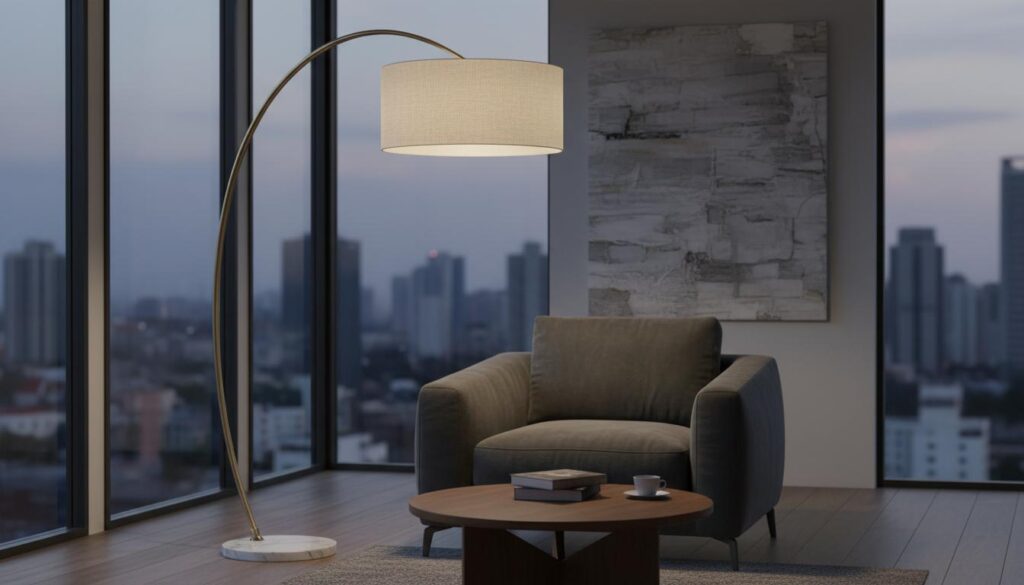
A good floor lamp can turn a dull corner into the best seat in the house. It adds light where you need it, no electrician required, and it moves with you when you shift flats. This guide explains what a floor lamp is, how it works, the main types, and how to choose one that suits New Zealand homes, power standards, and lifestyles.
What is
A floor lamp is a freestanding light that sits on the floor and plugs into a standard 230V wall socket. It usually has a heavy base, a pole, and a head or shade that directs light. Many models include a foot switch, a touch dimmer, or a smart bulb.
Unlike ceiling fittings, a floor lamp needs no wiring. You place it where you want light—behind a sofa, next to an armchair, beside a desk, or in a dark hallway—and plug it in. Because it is movable, it is perfect for rentals and for rooms that need flexible, layered lighting.
Common parts include:
- Base: weighted for stability
- Pole: fixed or adjustable height/arm
- Head/shade: directs or diffuses light
- Bulb or integrated LED module
- Switch: on-cord, foot pedal, touch control, or app (with smart bulbs)
How it works
Most floor lamps in New Zealand run on 230V/50Hz mains power with an AU/NZ Type I plug. You insert a bulb—usually LED E27 or GU10—into the socket, switch it on, and the circuit delivers power to the light source. Integrated-LED models have a driver built into the head or pole that converts mains power to low-voltage DC for the LEDs.
How the lamp shapes light depends on the design:
- Uplighters (torchieres) bounce light off the ceiling for even, ambient light
- Shaded lamps soften glare and add warm, cosy light
- Task or reading lamps use a focused head to light a book or craft project
- Arc lamps swing light over a seating area without a side table
Light levels and colour
When choosing brightness and tone, pay attention to these metrics:
- Lumens: measures brightness. 800–1,600 lm suits most living rooms; 450–800 lm focused on the page is ideal for reading.
- Kelvin (K): colour temperature. 2,700K–3,000K is warm and homely; 3,500K–4,000K is neutral and better for tasks; 5,000K is daylight-like and can feel cool at night.
- CRI (Colour Rendering Index): 80+ is fine; 90+ shows colours more accurately for art, textiles, and plants.
- Wattage: with LED, lower watts can be very bright. A 9–12W LED often equals a 60–75W old incandescent.
If you want dimming, use a dimmable LED bulb and a lamp with a compatible dimmer, or use a smart bulb and control brightness via app or voice. Halogen lamps get hot and use more power, so most NZ households now choose LED for safety and efficiency.
Types / examples
Floor lamps come in many shapes. Pick the style that matches your task and room size.
- Torchiere (uplighter): throws light up to the ceiling for ambient glow in lounges and bedrooms.
- Reading/task floor lamp: adjustable head and arm; places bright, directed light right where you need it.
- Arc floor lamp: long curved arm that reaches over a sofa or dining table; great as a statement piece.
- Tripod floor lamp: three legs and a fabric or rattan shade; stable and decorative.
- Tree or multi-head: several adjustable heads for flexible coverage.
- Column or LED strip lamp: slim, modern profile that washes light along a wall or corner.
- Pharmacy lamp: vintage-style adjustable metal head for precise task lighting.
| Type | Best use | Typical brightness | Footprint | Pros | Cons |
|---|---|---|---|---|---|
| Torchiere/uplighter | General ambient light in lounge/bedroom | 1,000–2,000 lm | Small base | Even room glow, affordable | Limited task lighting; can cause ceiling glare on glossy paint |
| Reading/task | Beside chair, desk, craft nook | 450–1,000 lm focused | Small to medium | Precise light, eye-level control | Narrow beam; not for whole-room light |
| Arc | Over sofa or dining table | 800–1,600 lm | Wide reach, heavy base | Dramatic look, replaces pendant | Needs space; can wobble if base is light |
| Tripod | Feature corner in living room | 800–1,600 lm diffused | Medium to large | Stable, decorative | Takes more floor area |
| Tree/multi-head | Flexible lighting for shared spaces | Up to 2,400 lm combined | Medium | Multiple directions from one plug | Looks busy; more switches |
| Column/LED strip | Accent wall wash, media rooms | 300–1,200 lm | Very small | Modern, subtle glow | Not a primary light source |
Pros and cons
- Pros
- No electrician needed; plug-and-play on NZ mains
- Portable for rentals or room changes
- Great for layered lighting with ceiling and table lamps
- LED options save power and reduce heat
- Smart bulbs add dimming, timers, and voice control
- Cons
- Takes floor space and can be a trip hazard if cables cross walkways
- Cheap models may wobble or tip
- Glare if the bulb is visible at eye height
- Some integrated-LED lamps are not repairable when the module fails
How to use or choose
Key factors for New Zealand homes
- Purpose: ambient glow, reading, or accent light
- Brightness: aim for 800–1,600 lm for lounges; add a 450–800 lm task head for reading
- Colour temperature: 2,700K–3,000K for cosy evenings; 3,500K–4,000K for study areas
- Shade and glare: fabric diffusers soften light; metal shades focus light
- Height: 1.5–1.8 m for general use; reading heads should sit slightly above eye level when seated
- Base stability: a heavy base is safer in homes with kids or pets; consider tip-resistant designs in quake-prone regions
- Bulb fitting: common E27 screw; check the lamp’s max watt rating and use LED equivalents
- Dimming and controls: foot switch, touch dimmer, or smart bulb compatibility
- Compliance: look for products meeting AS/NZS 60598 (luminaires) and with a suitable plug for NZ
- Retail and support: local retailers (e.g., Mitre 10, Bunnings, Briscoes, Freedom, Lighting Direct) and online stores offer wide ranges; CGA rights apply to faulty goods
Quick setup: place a floor lamp for a reading nook
- Pick the chair you use most and note where your shoulder line sits.
- Place the floor lamp slightly behind and to the side of the chair on your dominant-hand side.
- Adjust height or head so the light falls onto the page from above, not into your eyes.
- Fit a 400–800 lm dimmable LED (2,700K–3,000K) for comfortable evening reading.
- Run the cable along the wall, not across the walkway; use cable clips if needed.
- Test for glare on glossy pages; tilt or diffuse if needed.
- Set a timer or routine in your smart app if using a smart bulb.
Safety and efficiency tips
- Keep shades and bulbs clear of curtains and heaters.
- Do not exceed the lamp’s max watt rating; choose LED for high brightness with low heat.
- Use RCD-protected outlets where possible, especially in older homes.
- In regions with frequent shakes, choose a wide/heavy base and place away from exits.
- Dust shades and heads regularly; clean fabric shades with a lint roller to keep light output high.
Bulb choices compared
| Bulb type | Energy use | Heat | Dimming | Lifespan | Notes |
|---|---|---|---|---|---|
| LED (standard) | Very low | Low | Yes, if dimmable version | 15,000–25,000 hrs | Best all-round; choose CRI 90+ for colour accuracy |
| Smart LED | Low | Low | App/voice dimming | 15,000–25,000 hrs | Scenes, schedules; works well in rentals |
| Halogen | High | Very hot | Yes | 2,000–3,000 hrs | Great colour but inefficient and hot; less common now |
| CFL | Medium | Moderate | Not always smooth | 8,000–10,000 hrs | Slower start; being phased out in favour of LED |
FAQ
Do I need an electrician to install a floor lamp in NZ?
No. A floor lamp is a plug-in appliance for 230V outlets. Place it, fit a bulb, and plug it in.
What brightness should I choose for a living room floor lamp?
For general light, 1,000–1,600 lumens works well. Add a separate 450–800 lumen reading lamp beside seating if you read or knit.
Which colour temperature is best at night?
Warm white 2,700K–3,000K feels relaxed and is easier on your eyes. Use neutral 3,500K–4,000K only where you need task clarity.
Can I use a smart bulb in any floor lamp?
Yes, in most lamps with a standard E27 socket. Leave the lamp switched on and control the bulb via app or voice. Avoid double-dimming—do not use a smart bulb with a built-in dimmer unless the manufacturer allows it.
What about safety and tip-over risk?
Choose a weighted base and route cables along walls. Keep the lamp clear of curtains and heaters. In shake-prone areas, place the lamp where it cannot fall across exits.
Are floor lamps allowed in rentals?
Yes. They are ideal for rentals because they do not alter wiring or walls. Smart bulbs and plug-in dimmers add control without breaching tenancy agreements.
What wattage is safe for my lamp?
Check the lamp’s rating on the socket or label—often 40–60W max for incandescent. With LED, you can use a 6–12W bulb that gives the same light without exceeding heat limits.
Where can I buy a floor lamp in New Zealand?
Common places include Mitre 10, Bunnings, Briscoes, Freedom, Lighting Direct, speciality lighting shops, and NZ-based online retailers. Compare warranty terms and return policies; the Consumer Guarantees Act protects you if a product is faulty.
How tall should a floor lamp be?
For general use, 1.5–1.8 m suits most rooms. For reading, position the light source just above seated eye level and angle it to avoid glare.
Can I use a dimmer with LED bulbs?
Yes, if the bulb is dimmable and the dimmer is compatible. Many floor lamps use simple on/off switches; pair those with a dimmable smart bulb for easy control.
Final thought
A well-chosen floor lamp adds comfort, flexibility, and style without touching the wiring. Match type, brightness, and colour to your task and room, choose a stable base, and go LED for low power and cool operation. With those basics sorted, any corner can become the best-lit spot in your home.